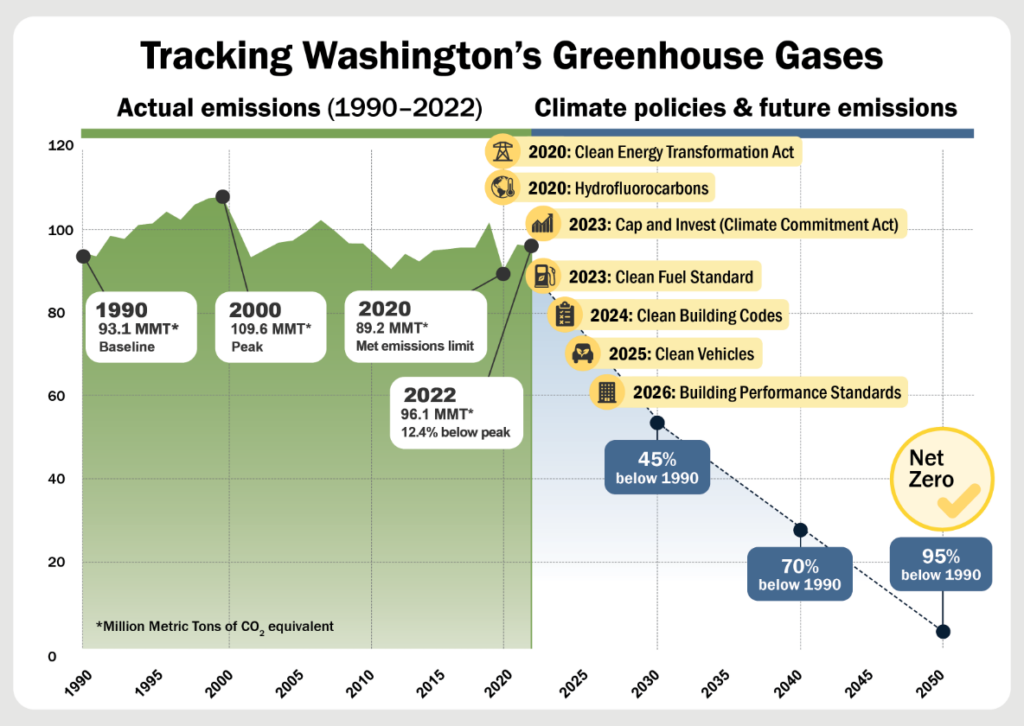
Data tells a story. When greenhouse gas emissions are tracked over time, patterns begin to emerge, progress becomes measurable, and future goals become easier to define. For Tribes developing climate action plans, establishing that starting point is an important step toward turning climate goals into projects with a multitude of benefits to their entire community.
Climate action planning can feel like a big undertaking. There are emissions to understand, priorities to balance, community needs to consider, and decisions to make regarding where limited time and resources can have the greatest impact. Greenhouse gas inventories are the foundation of this planning process. As part of the ATNI Comprehensive Climate Action Planning project, Resource Synergy will work with each participating Tribe to build that foundation. These inventories help establish a clearer picture of where emissions are coming from and provide information the Tribe can use as it considers future climate priorities.
A greenhouse gas inventory is a structured accounting of emissions from a community, government, organization, or
set of activities. It brings different gases and sources into one common measure: carbon dioxide equivalent (CO2e)
so they can be understood together. Depending on the scope or boundaries of the inventory, this can include
emissions from electricity use, heating, transportation, waste, and other sources.
In practical terms, the process asks: What activities take place? What energy or fuel do they use, or what waste do they generate? Utility bills, fuel records, vehicle mileage, waste estimates, and other data are collected, checked, and converted into emissions using standard factors. The result is a baseline: a snapshot of where things stand today.
That baseline matters because every Tribal community is different. Energy systems, transportation needs, infrastructure, geography, available resources, and community priorities can vary significantly from one Tribe to another. Rather than beginning with a predetermined list of climate solutions, an inventory helps a Tribe see which activities matter most in its own context and where their opportunities may exist.
Collecting data is only worthwhile if that information can support better decisions.
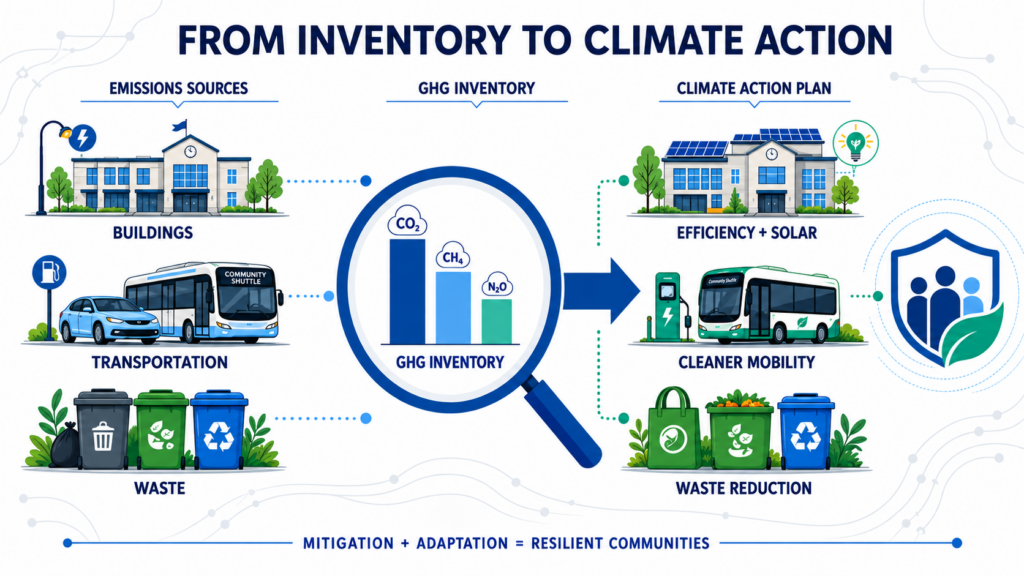
Once an inventory is completed, it provides a visual of which activities account for larger portions of emissions and where there may be opportunities for reductions. It also provides a Tribe with a basis to measure changes over time.
For example, if electricity use in buildings is a significant source of carbon emissions, a Tribe may consider energy efficiency or solar photovoltaic (PV) systems. Fuel use may point toward fleet improvements, while waste emissions may support recycling or composting projects. The right measures will depend on the community and its priorities.
The inventory is not the climate action plan itself, and it does not make decisions for a Tribe. Instead, it is one piece of the larger planning process. The information it provides will help connect current conditions with future goals and projects. Its usefulness depends on the data available, so estimates and gaps should be documented properly. Even with those limits, it provides a transparent basis for setting priorities, seeking funding, and tracking progress. another. Rather than beginning with a predetermined list of climate solutions, an inventory helps a Tribe see which activities matter most in its own context and where their opportunities may exist.
A Comprehensive Climate Action Plan is primarily focused on reducing emissions, but the benefits of climate
action can extend far beyond mitigation and reducing carbon pollution. Projects such as energy efficiency,
renewable energy, and battery energy storage systems can also improve energy reliability, strengthen resilience, and
help communities prepare for disruptions. Projects to improve land use management can help improve community
resilience to drought and wildfire. In this way, mitigation investments can support broader Tribal priorities while
helping build safer, more resilient communities.
For each Tribe participating in the ATNI CCAP project, the inventory process begins with setting boundaries and knowing what information is needed. As is an important part of any project, setting good boundaries will allow you to really identify what data you will need to look for.
This can mean identifying what data already exists, such as electricity and heating bills, fuel use records, vehicle mileage, waste and recycling records, or other information about Tribal operations and community activities. The process also includes determining where additional information may be needed and working with Tribal staff to understand the systems and activities that should be represented.
A greenhouse gas inventory does not require a Tribe to already have every answer or every dataset organized before getting started. Part of the work is figuring out what information is available, where gaps exist, and how to build the most useful picture possible with the data at hand. Future inventories can improve as more complete information becomes available.
Just as importantly, the process should reflect the Tribe itself. The goal is to develop information that can support Tribal priorities and provide a practical foundation for the climate planning work that follows.
Over the coming months, Resource Synergy and ATNI will continue working with participating Tribes through different stages of climate action planning. Greenhouse gas inventories are one of the early building blocks in that process.
There is still plenty of work ahead, but beginning with a clearer understanding of current emissions gives Tribes something concrete to build from. From there, the conversation can move toward priorities, potential projects, community needs, and the actions that make the most sense for each Tribe.
We look forward to sharing more as this work progresses, including a closer look at what goes into developing a Comprehensive Climate Action Plan and how information from a greenhouse gas inventory can help guide the next steps.
Jamie Judkins: jamie@resource-synergy.com
ATNI CPRG Team: CPRG@atnitribes.org
Learn more here: https://resource-synergy.com/atni-cprg/